I am an Assistant Professor at Xi’an Jiaotong-Liverpool University (XJTLU).
Previously, I received my Ph.D. in Computer Science from the Department of Computing at The Hong Kong Polytechnic University, advised by Prof. Jiannong Cao (曹建农). I earned my M.Sc. from KTH Royal Institute of Technology, advised by Prof. Zhibo Pang (庞智博), and my B.Eng. in Communication Engineering from Beijing Jiaotong University. During my doctoral studies, I was a visiting researcher at University of Southern California (USC), where I collaborated with Prof. Yan Liu.
My research interests include recommender systems, embodied intelligence, and multi-agent systems, with a particular focus on building controllable and trustworthy recommendation world models and recommendation agents.
🔥 News
- 2026.05: 🎉🎉 One paper about Mitigating Gradient Pathology in PINNs was accepted by ICML 2026, congratulations to Yichen Luo.
- 2026.02: 🎉🎉 We release UniGenRec: A Unified Generative Recommendation Toolbox Code
- 2026.02: 🎉🎉 One paper about Positive Learning Benchmark was accepted by ICLR 2026, congratulations to Dr. Haiyang Zhang and Qiuyi.
- 2026.01: 🎉🎉 Two paper about Generative Recommendation Systems was accepted by AAAI 2026, congratulations to Peiyu and Leiqi.
- 2025.12: Tutorial on “SID-based Generative Recommendation Systems” @JD AI-Lab.
- 2025.11: 🎉🎉 One papers were accepted by NeurIPS 2025, congratulations to Ming Cheng.
- 2025.10: Talk on “Controllable Recommendation Systems”@(NSFC) Youth Fund Symposium.
- 2025.10: Tutorial on “Building Robust and Interpretable ECG Models for Early Myocardial Infarction Detection” @宁波大学第一附属医院.
- 2025.10: Serve as an Session Chair for IJCAI 2025 for Recommendation Session.
- 2025.09: 🎉🎉 One paper about RAG-LLM Unlearning was accepted by ICDM 2025, congratulations to Haichao.
- 2025.04 🎉🎉 One paper about Efficient PINNs was accepted by IJCAI 2025, congratulations to Yichen.
- 2025.07 🏆 Become a member of the Edge Computing Committee of the Association for Automation.
- 2025.03: 🏆 Embodied AI Through Cloud-Fog Computing: A Framework for Everywhere Intelligence. (IEEE 33rd International Symposium on Industrial Electronics [Best Paper Award]).
- 2025.02 🎉🎉 One paper about LLM-Based Sequential Recommendation was accepted by APWeb’25, congratulations to Chenke.

📝 Publications
* : co-first author, ✉ : corresponding author
Psychologically Grounded User Simulation for Recommender Systems
Ongoing Project;

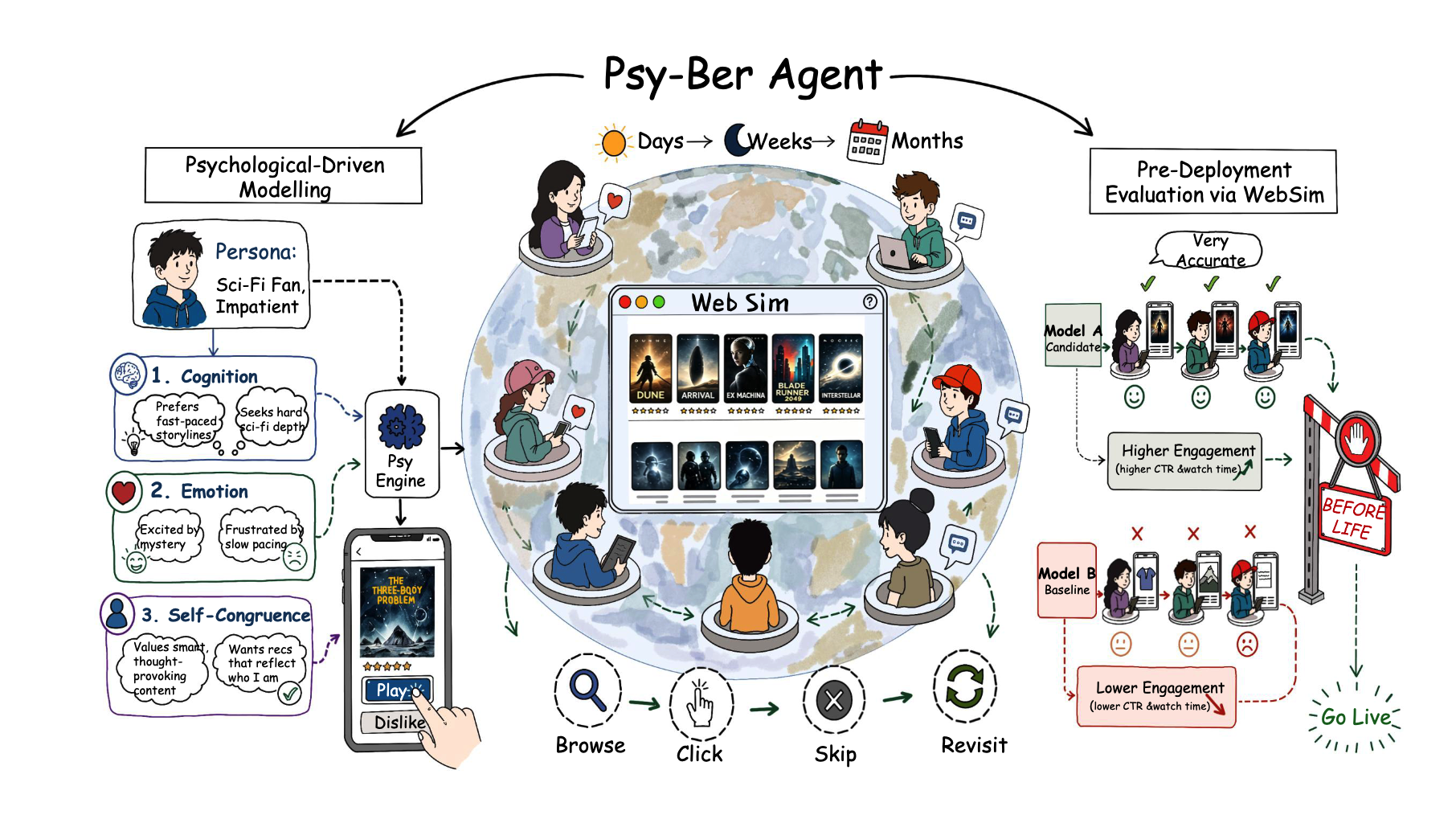
- PsyBer-Agent is a psychology-driven user simulator designed for the reliable pre-deployment evaluation of recommender systems. Unlike traditional LLM-based simulators that merely imitate surface behaviors, PsyBer-Agent utilizes a “Psy-Engine” to model evolving latent states, including exposure, fatigue, and affect. It calibrates these dynamics against real-world interaction logs using Gromov-Wasserstein optimal transport, enabling high-fidelity simulation without fine-tuning the backbone LLM. Supported by the new WebSim platform and PsyBer Benchmark, evaluations across movie and e-commerce domains show that PsyBer-Agent significantly outperforms prompt-only models in behavioral realism, robustness, and interpretability.
Mitigating Gradient Pathology in PINNs through Aligned Constraint
Yichen Luo, Peiyu Zhu, Dongxiao Hu, Jia Wang, Tailin Wu, Dapeng Lan, Yu Liu, Zhibo Pang ✉
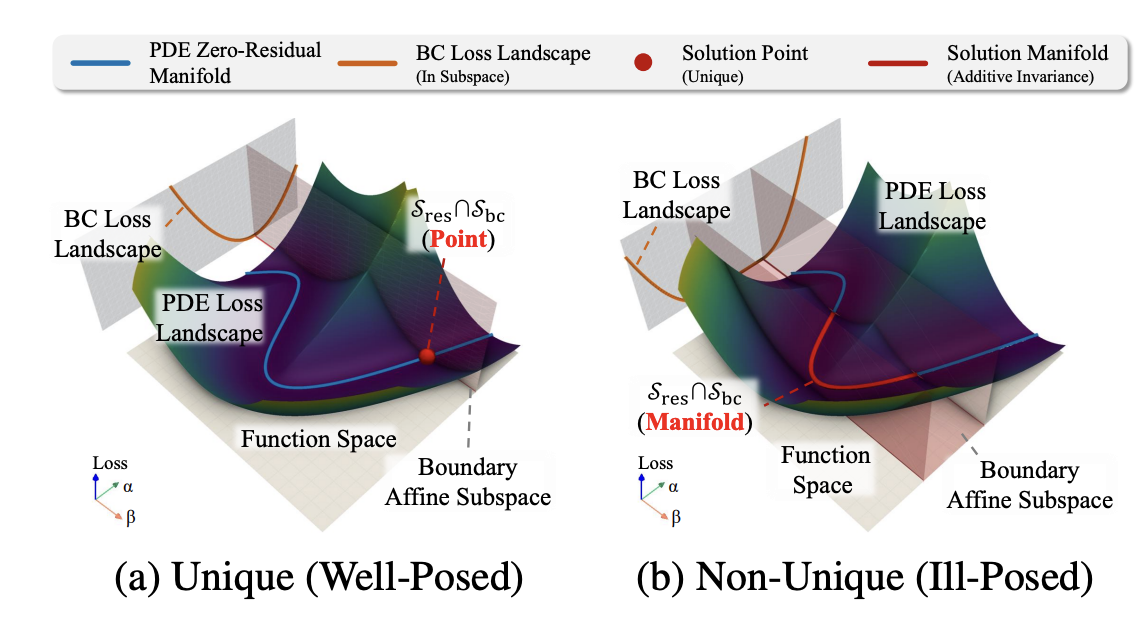
- To address “gradient pathology” in PINNs caused by conflicting gradients between PDE residuals and boundary constraints, this paper proposes Constraint-Aligned loss with Manifold Lifting (CAML). By reformulating zeroth-order terms into aligned constraints and introducing a delay factor to bypass high-curvature regions, CAML effectively mitigates gradient conflicts. Experiments demonstrate that CAML significantly enhances numerical stability and optimization efficiency, particularly for complex PDEs with composite boundary conditions.
Pu-Bench: A Unified Benchmark for Rigorous and Reproducible PU-Learning
Qiuyi Chen*, Haiyang Zhang, Leqi Zhang, Changchun Li, Jia Wang, Wei Wang

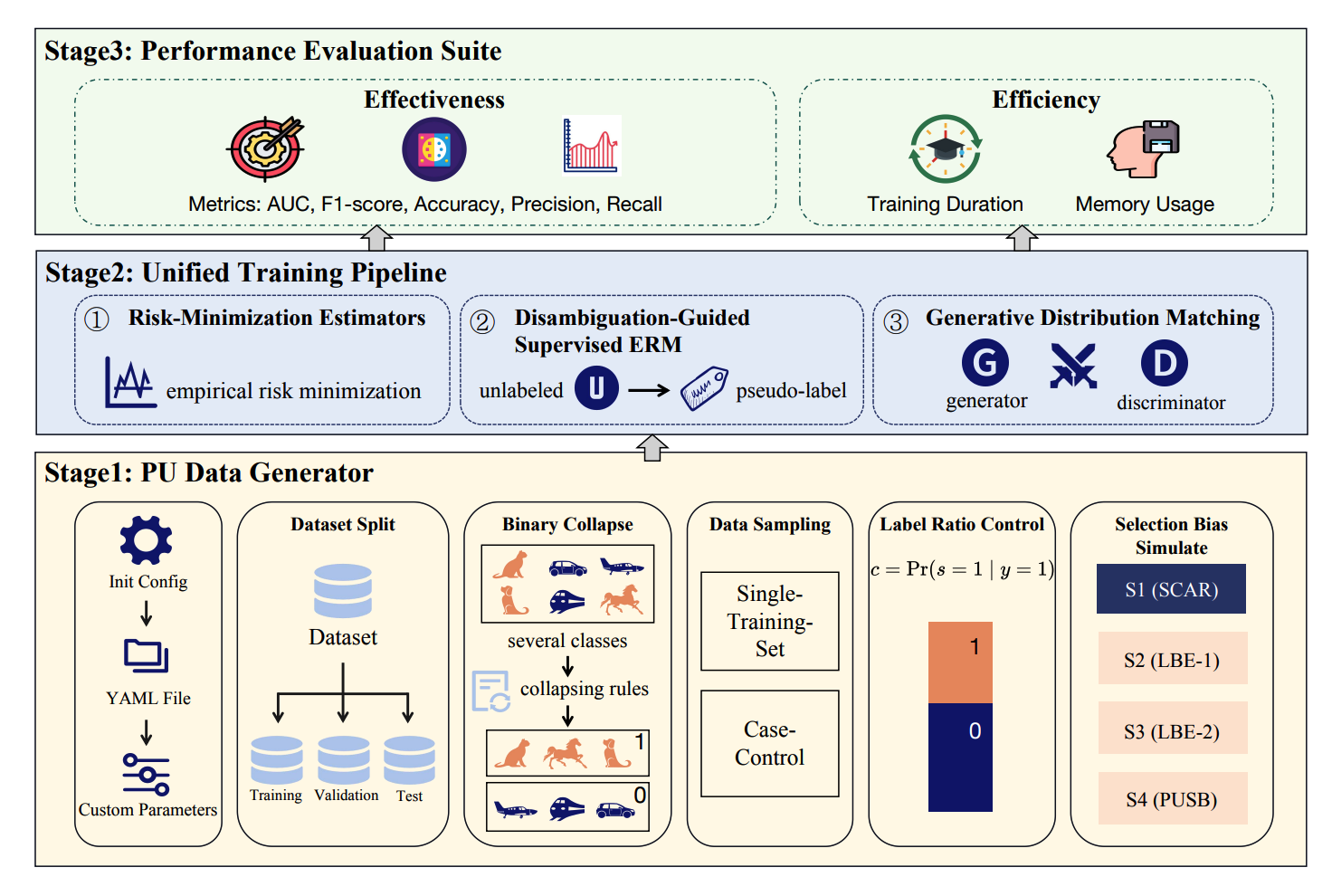
- This paper introduces PU-Bench, the first open-source unified benchmarking platform for Positive-Unlabeled (PU) learning, designed to provide a rigorous, systematic, and reproducible evaluation framework through standardized data generation, algorithm integration, and assessment protocols.
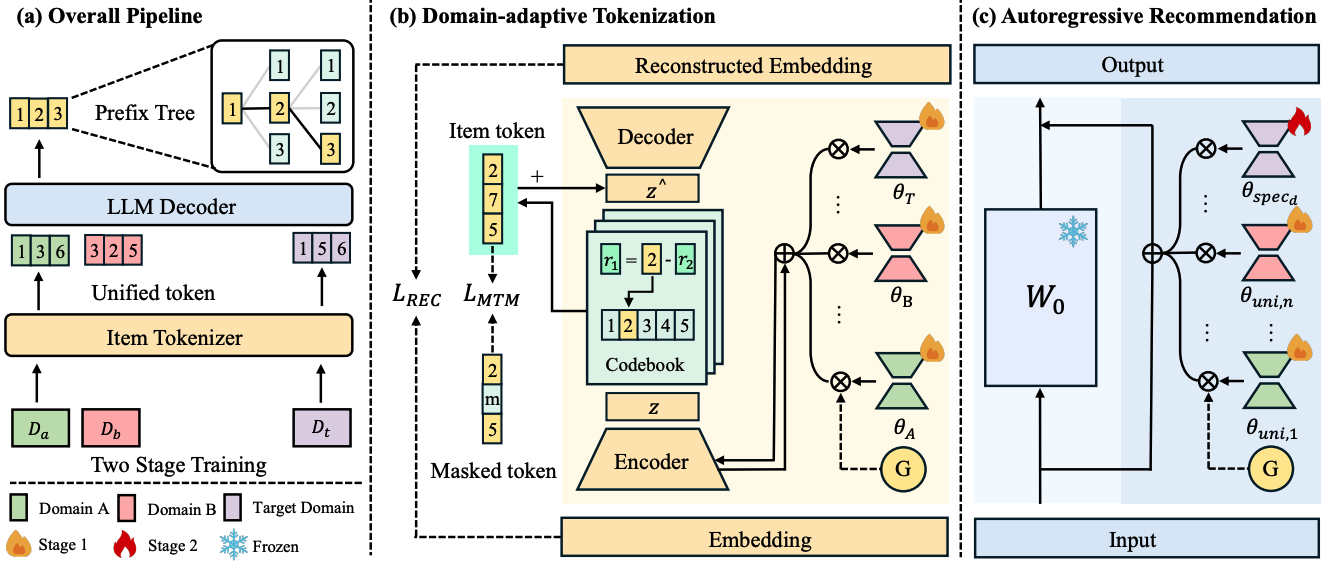
From IDs to Semantics: A Generative Framework for Cross-Domain Recommendation with Adaptive Semantic Tokenization
Peiyu Hu*, Wayne Lu*, Jia Wang ✉

- We propose a novel generative cross-domain recommendation framework, GenCDR. To the best of our knowledge, this is the first work to introduce the generative semantic ID paradigm into LLM-based cross-domain recommendation.
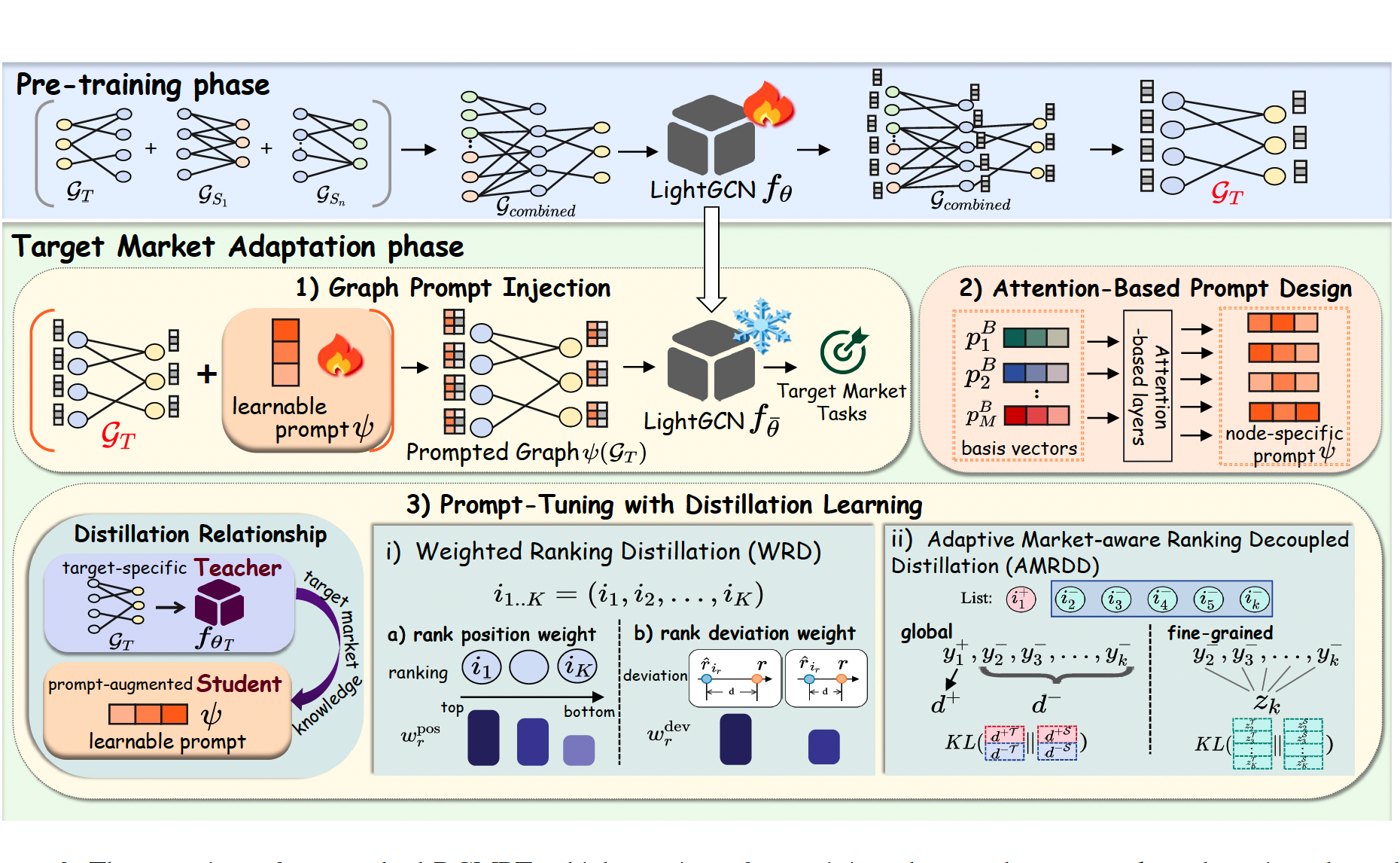
Breaking Down Market Barriers: Distilled Prompt-Tuning Approach for Cross-Market Recommendation
Leqi Zhang*, Wayne Lu, Haiyang Zhang, Elliott Wen, Zhixuan Liang, Jia Wang ✉
- A self-improving framework that enhances Embodied Visual Tracking (EVT) with Vision-Language Models (VLMs) to recover tracking from failure.
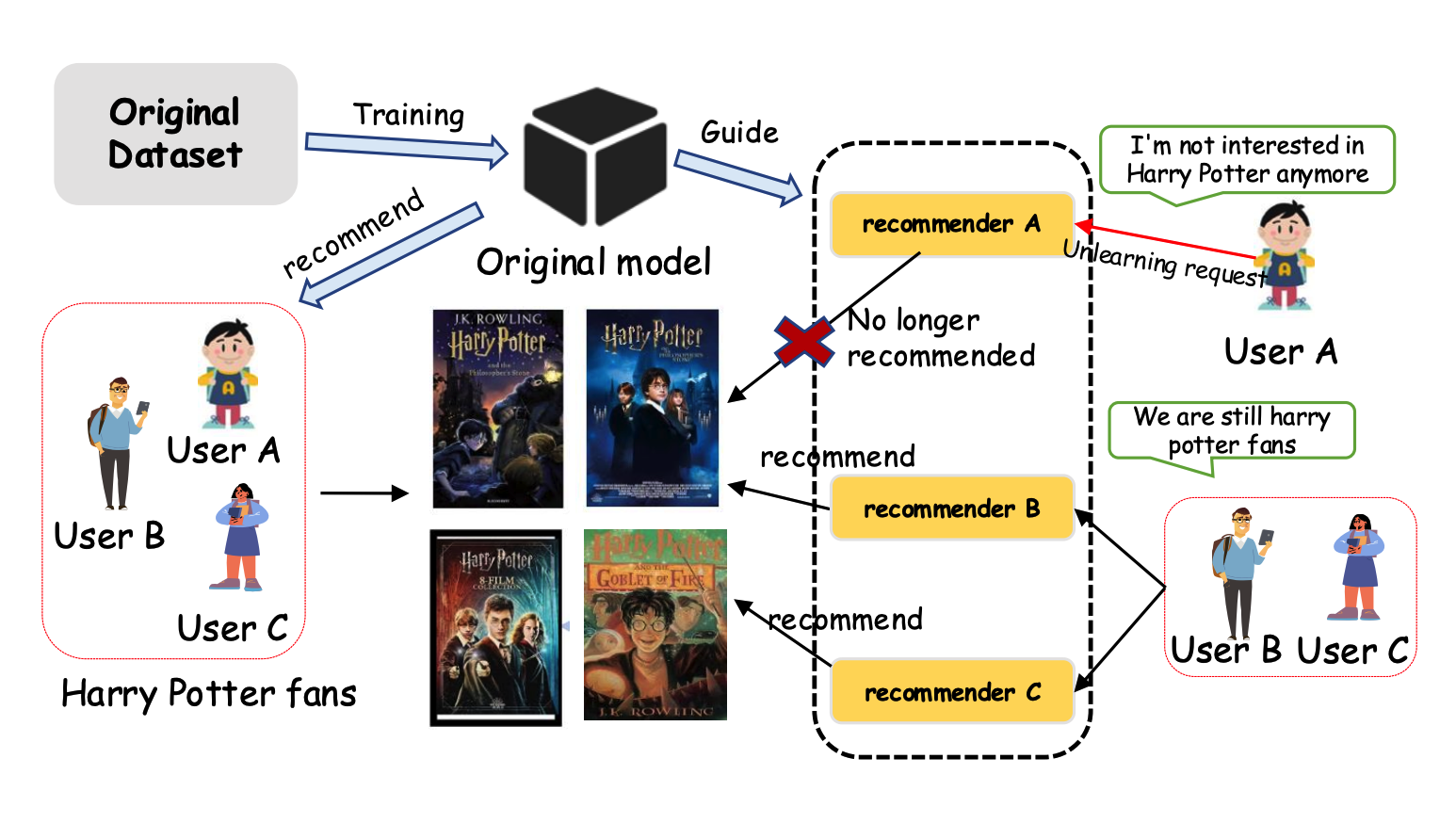
Customized Retrieval-Augmented Generation with LLM for Debiasing Recommendation Unlearning
Haichao Zhang*, Chong Zhang, Peiyu Hu, Shi Qiu, Jia Wang✉

- CRAGRU is a unified framework that integrates RAG (Retrieval-Augmented Generation), Large Language Models (LLMs), and Recommendation Unlearning. The framework is modular, reproducible, and designed for flexible experimentation.
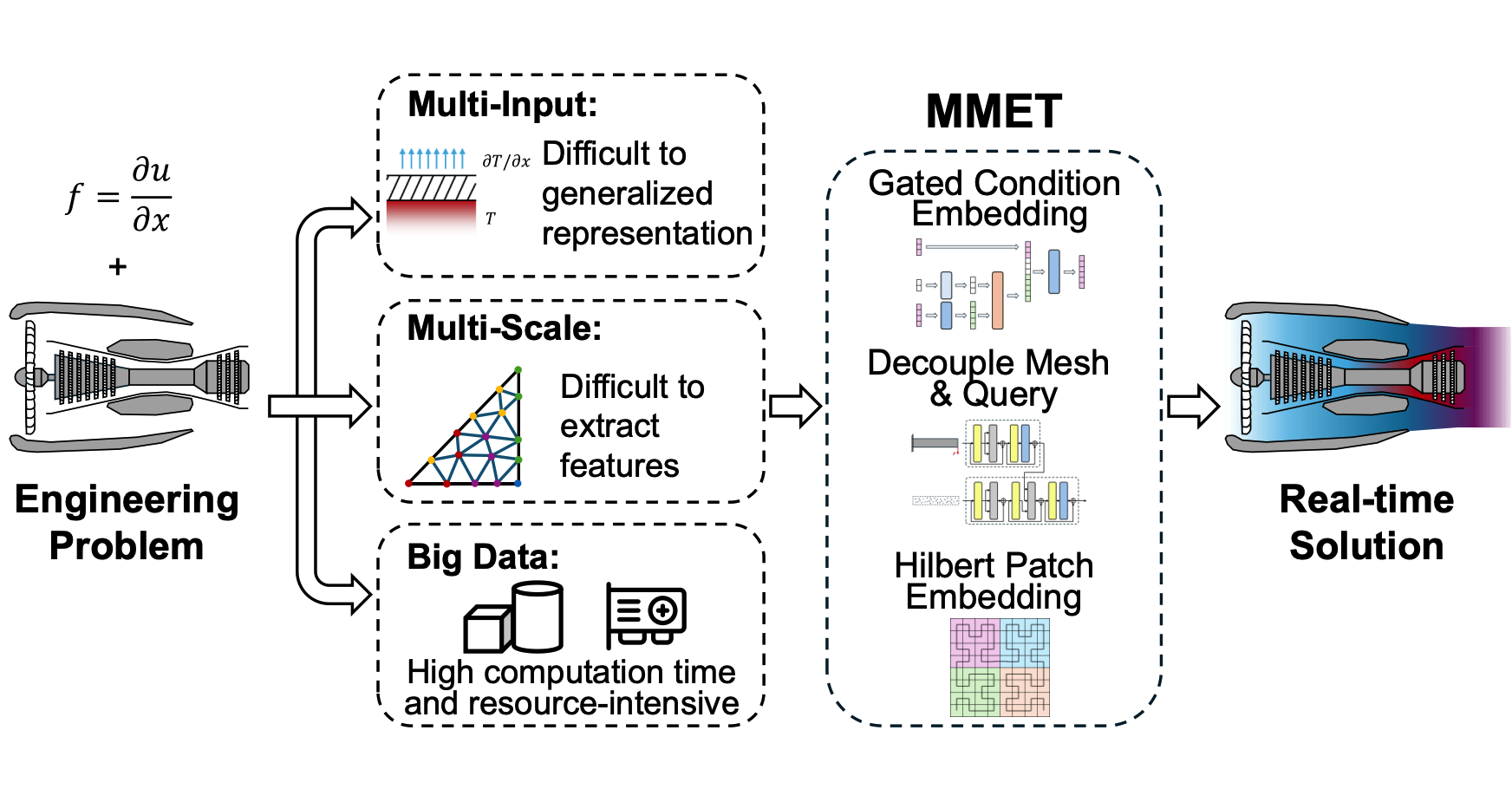
MMET: A Multi-Input and Multi-Scale Transformer for Efficient PDEs Solving
Yichen Luo, Jia Wang , Dapeng Lan, Yu Liu, Zhibo Pang∗✉

- MMET (Multi-Input and Multi-Scale Efficient Transformer) is a Transformer-based framework tailored for solving partial differential equations (PDEs) in complex scientific and engineering domains.
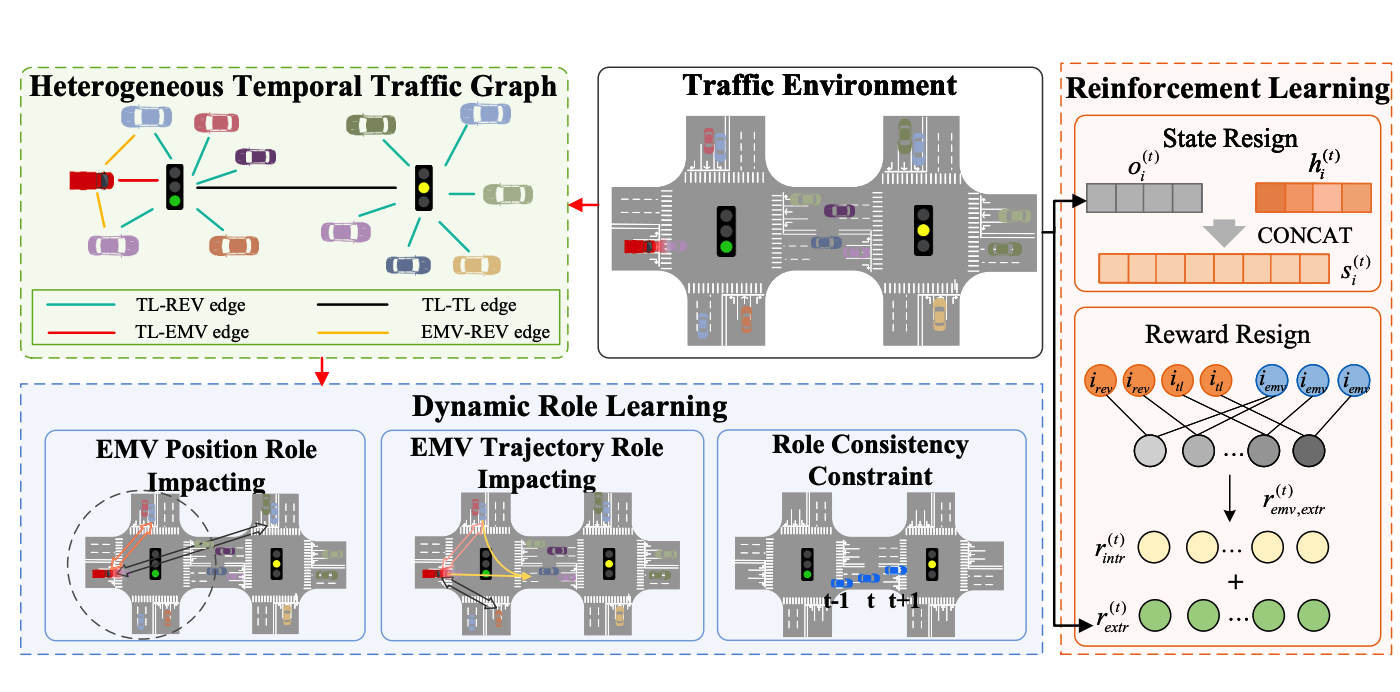
Role-aware Multi-agent Reinforcement Learning for Coordinated Emergency Traffic Control
Ming Cheng, Hao Chen, Zhiqing Li, Jia Wang, Senzhang Wang

- This paper studies the challenge of emergency traffic control and the limitations of existing models. The authors propose the RMTC framework, which uses HTTG, dynamic role learning, and role-aware multi-agent RL to coordinate traffic components.
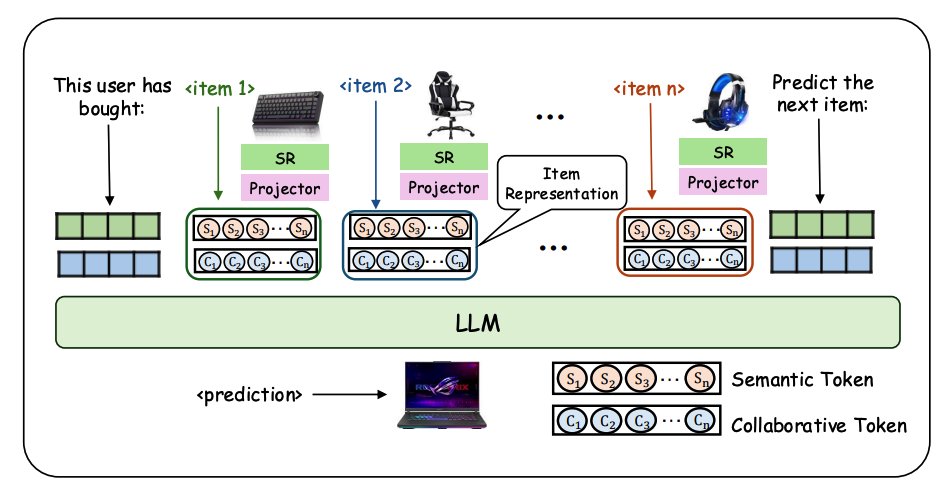
Uncertainty-Aware Semantic Decoding for LLM-Based Sequential Recommendation
Chenke Yin*, Fan Li*, Jia Wang✉, Dongxiao Hu, Haichao Zhang, Chong Zhang, Yang Xiang
- introduce the Uncertainty-aware Semantic Decoding framework to address the misalignment between standard text generation approaches and recommendation requirements.
🎖 Selected Honors and Awards
- 2025.02 IEEE 33rd International Symposium on Industrial Electronics, Best Paper Award.
- 2016.08 Presidential PhD Fellowship.
📖 Educations
- The Hong Kong Polytechnic University, Ph.D. in Computer Science.
- KTH Royal Institute of Technology, Msc. in Computer Science.
- Beijing Jiaotong University, B.S. in Communication Engineering.
💬 Invited Talks
- 2025.12: Talk on “SID-based Generative Recommendation Systems” @JD AI-Lab.
- 2025.10: Talk on “Controllable Recommendation Systems”@(NSFC) Youth Fund Symposium.
- 2025.10: Talk on “Building Robust and Interpretable ECG Models for Early Myocardial Infarction Detection” @宁波大学第一附属医院.
💻 Professional Service
- Senior Program Committee: IJCAI, WWW(industry)
- Journal Reviewer: ACM Computing Surveys, Information Science, KBS, ACM TORS,IEEE TOAI, ACM TOMM, IEEE TCE.
- Conference Reviewer/PC Member: ICML, NeurIPS, ICLR, AAAI, ACM MM, SIGIR, WWW